For more than four decades, the partnership between Clatsop Community College (CCC) and Columbia Memorial Hospital (CMH) has played a critical role in preparing highly skilled nurses and healthcare professionals for Clatsop County and the surrounding region. Through its continued annual support, including an $80,000 contribution to help fund nursing instruction, CMH is helping CCC uphold a standard of excellence that directly benefits local healthcare facilities and patients.
The CCC Nursing Program has long served as a cornerstone for healthcare workforce development on the North Coast. Since admitting its first cohort in 1983, the program has graduated more than 700 students who now work in hospitals, clinics, and healthcare agencies throughout Oregon and beyond. The program continues to maintain strong approval status through the Oregon State Board of Nursing and is preparing to pursue national accreditation through the Accreditation Commission for Education in Nursing (ACEN).
“Partnerships like the one we have with Columbia Memorial Hospital are essential to sustaining high-quality nursing education in rural communities,” said Tina Kotson, Interim Associate Vice President of Nursing, Allied Health & Public Safety Health at CCC. “Their ongoing support helps ensure our students receive exceptional instruction, valuable clinical experiences, and the preparation needed to step confidently into the workforce.”
The CCC Nursing Program is part of the Oregon Consortium for Nursing Education (OCNE), a nationally recognized collaborative model that allows students to earn an Associate of Applied Science in Nursing degree while creating a streamlined pathway toward a Bachelor of Science in Nursing (BSN) through Oregon Health & Science University. Six full-time and three part-time instructors deliver the competency-based OCNE curriculum, which is recognized nationally for innovation in nursing education.
CMH’s annual support helps CCC maintain the rigorous instructional and clinical standards required for nursing education. Nursing programs are particularly costly to operate due to state-mandated instructor-to-student clinical ratios. Oregon requires one instructor for every eight students during clinical training, meaning additional faculty are needed to provide the more than 500 hours of hands-on clinical experience each student completes prior to graduation.
Support from CMH also strengthens the college’s ability to expand and sustain enrollment. Combined with additional workforce development grants received since 2023, CCC increased annual admissions to 24 nursing students, representing a 20% increase in enrollment capacity.
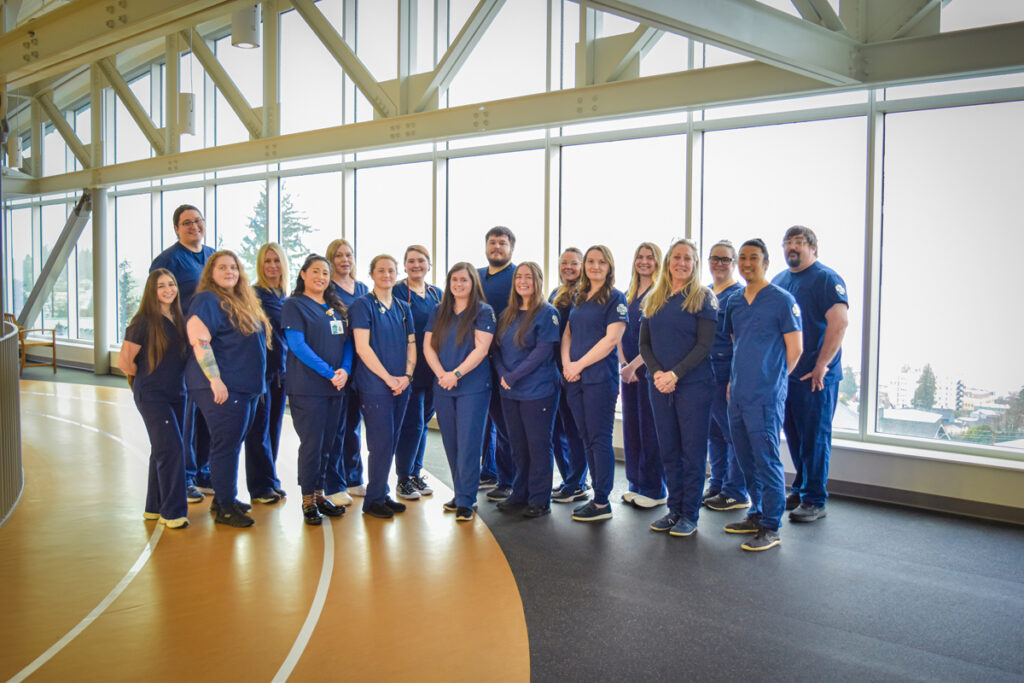
The results of that investment are already being seen throughout the region. The 2025 graduating nursing class achieved a 100% first-time pass rate on the NCLEX-RN national licensure exam, with all 19 graduates obtaining Oregon RN licenses within two weeks of graduation. Seventeen of those graduates chose to remain in the local area and work in healthcare facilities throughout Clatsop County, including nearly a dozen employed at CMH.
As the healthcare needs of the region continue to grow, local nursing education remains vital to maintaining healthcare access in rural communities. Many CCC graduates choose to live and work locally, helping fill critical workforce shortages at hospitals, clinics, and long-term care facilities.
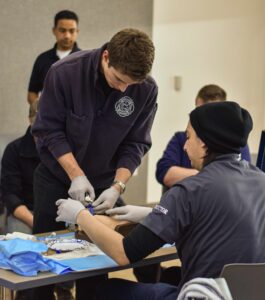
In addition to nursing education, CCC’s Allied Health programs including Medical Assisting, Nursing Assistant training, and Emergency Medical Technician certification also benefit from the longstanding partnership with CMH. Students across these programs participate in clinical rotations at the hospital and frequently transition into permanent healthcare positions within the region after completing their training.
“CMH’s commitment goes beyond financial support,” Kotson said. “Their partnership provides mentorship, clinical placements, advisory support, and career opportunities that directly shape the future of healthcare on the North Coast.”
The CCC Nursing Program continues to serve as an important pipeline for qualified healthcare professionals who are trained locally and remain committed to serving the community where they learned.