Clatsop Community College has received funding to expand its innovative HyFlex Classroom initiative, a major step in making education more flexible and accessible for students across the region.
CCC’s HyFlex classroom concept was based on a similar successful model known as “wraparound learning” at other community colleges. The difference at CCC was finding a way to deliver this experience without requiring additional employees or workload on instructors.
Vanessa Garner, CCC’s Director of Adult Education, sought to increase the availability of instructor-led classes for the GED program. After meeting with various stakeholders on campus, and speaking with other schools, she applied for and received a grant to create and develop the first true HyFlex learning space on campus. The goal was to make remote learning more immersive, supportive, and transparent for remote students, in-person students, and faculty.
The nearly $115,000 project is a shared investment. With support from an anonymous donor, CCC will add eight new HyFlex classrooms, building on the three already installed and three more funded through the Clatsop Community College Foundation and support from Mike and Laura Brosius. By 2026, CCC will operate 14 fully equipped HyFlex classrooms across its campuses. The new funding accelerates the expansion.
HyFlex (Hybrid-Flexible) classrooms allow students to choose how they attend class—in person, online in real time, or asynchronously via recorded sessions. The newer technologies use high-quality audio, cameras, and displays to fully connect in-person and remote students in the same learning environment. This ensures that remote learners can clearly see, hear, and engage with the instructor and classmates, while those in the classroom benefit from the same interactive technology. The format especially benefits rural learners, working adults, parents, and caregivers who face barriers to traditional class schedules.
“One of the priorities in our new strategic plan is improving student access,” said CCC President Jarrod Hogue. “Hybrid instruction, supported by high-quality classroom audio and video, allows us to provide greater flexibility for students balancing work, family, and transportation challenges—while ensuring they have the same opportunity to succeed.”
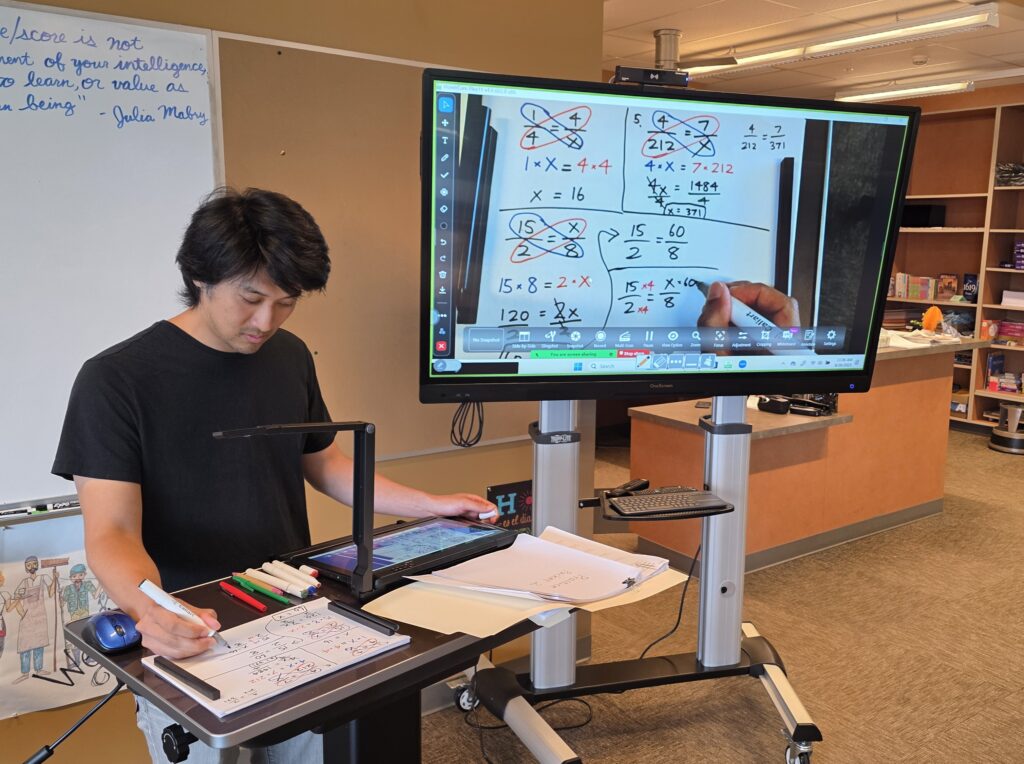
GED Math Instructor Kyle Fujisawa, who has been teaching GED Math at CCC for the last two years and will begin their final year of Nursing school this fall, has already seen the benefits of HyFlex technology in action.
“I see HyFlex benefitting the students because it removes barriers for participation,” Fujisawa said. “I’ve been working with students who are now able to join the class who couldn’t before, due to lack of transportation resources. It also allows students to stay home if they are sick, but still well enough to listen to a lesson.”
At the same time, Fujisawa noted the importance of active engagement in this new learning environment. “Remote learners may be more prone to falling into a passive learning mode. As a result, instructors must take a more active role in engaging students who are attending online.”
As more classrooms come online as HyFlex learning environments, CCC faculty will continue to adapt and innovate. The College plans to:
- Support faculty training in HyFlex delivery methods
- Introduce HyFlex course sections across multiple disciplines
- Collect and report student satisfaction, retention, and completion outcomes
- Highlight local success stories demonstrating the impact of flexible learning
Research has shown that flexible formats like HyFlex increase enrollment, retention, and completion rates for community college students. For CCC, HyFlex provides the reach and accessibility of multiple class options without sacrificing quality.
“HyFlex technology ensures students don’t have to choose between their education and their other responsibilities,” said Beth Van Elswyk, Foundation Director. “It creates an engaging classroom experience for both in-person and remote learners, helping more students reach their goals.”
The new equipment will be installed and ready to use for Winter Term 2026. Some courses, including math and business, are already available in a hybrid format this fall.